

Field Robots Faster.
Agency Tool Company gives robotics teams reliable infrastructure to build, deploy, manage, and operate real-world robots, so your team can focus on the things customers care about.

00 — THE PROBLEM
Existing build and deployment systems weren’t built for robots.
Robots are more like pets than cattle. Cloud and IoT tooling assumes disposable, identical, always-connected machines. Fielded robots break those assumptions.
Deployment challenges bottleneck developer iteration and field rollouts alike. The friction and risk make operations and customer teams wary of shipping updates.
THE SOLUTION
We build tools for the reality of robotics.
01 — ATC DEPLOY
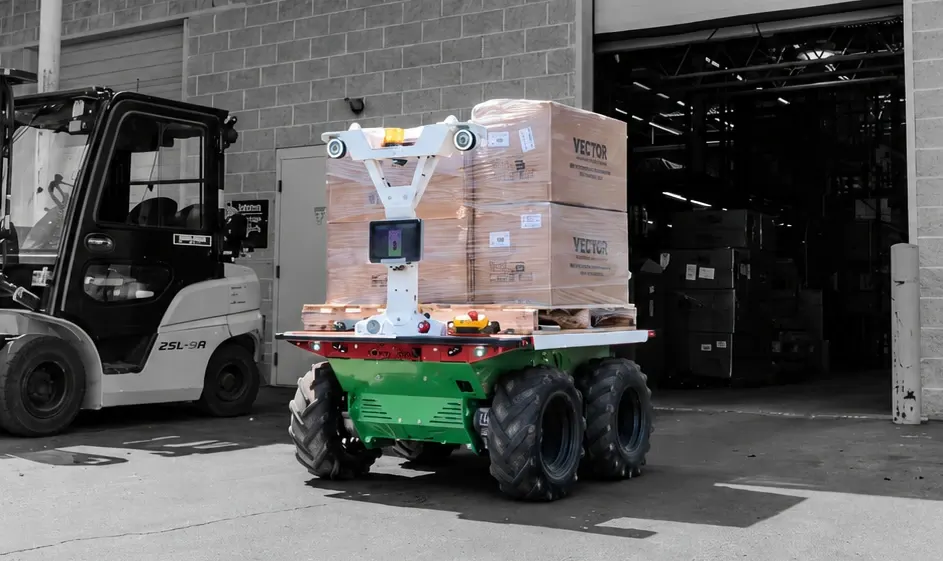
Built alongside teams putting robots into production environments.
IN BETA TODAY WITH



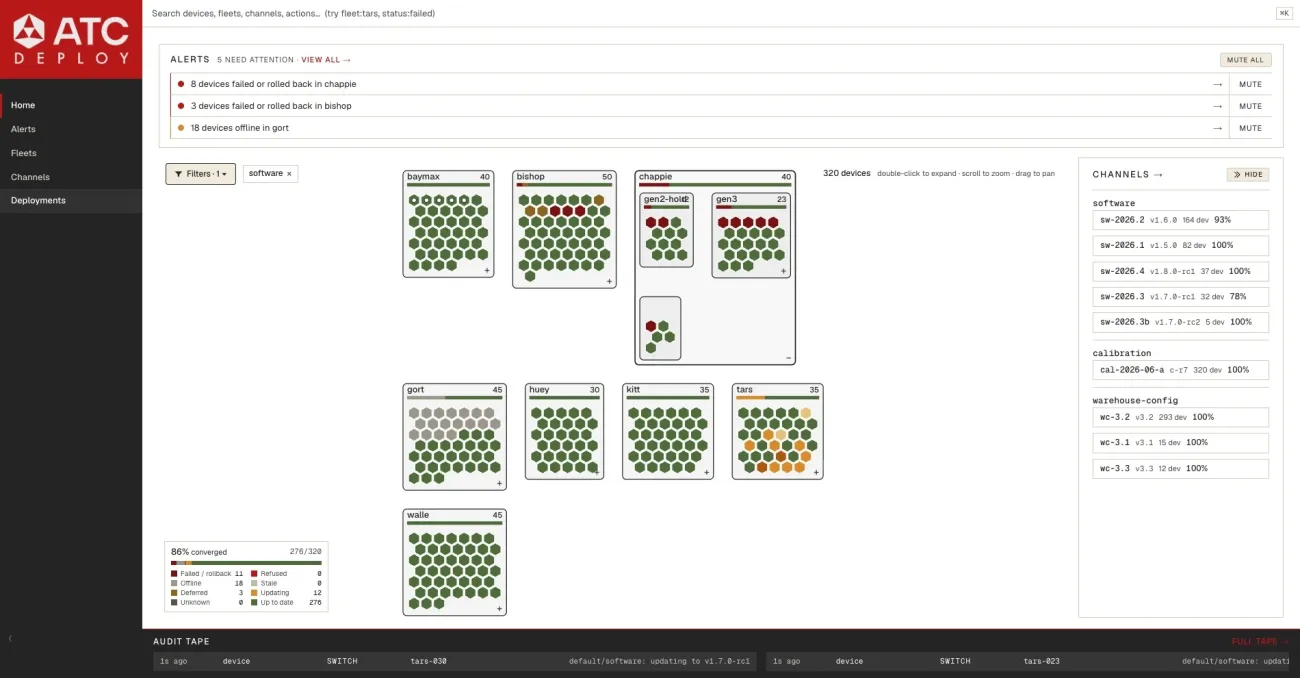
Over-the-air updates for one robot on your bench or thousands in the field.
EASY TO START
One line to install
No agents to babysit, no infrastructure project. Install on a robot and ship your first update in minutes.
$ curl -fsSL the install host, withheld until launch, | sh
Install link coming soon
LIGHTNING FAST
20x faster than a docker pull
Smart delta updates and compression move only what changed, so even 10GB+ images update in a fraction of the time.
FLEXIBLE
Works with your setup
Smart defaults out of the box but flexible to suit the reality of robotics.

With fast CLI tools for engineering and an ergonomic web UI for operations, ATC Deploy is the over-the-air update tool that works from a single robot to thousands of machines across the world. Put down the duct tape and use Deploy.
WHO IT’S FOR
You need ATC Deploy if
01
Your engineers are up after midnight SSH’d into robots to upgrade the fleet.
02
Your devs and test techs could take a lunch break every time they update software.
03
Flaky network connections and intermittent uptime make it difficult to keep a synchronized fleet.
04
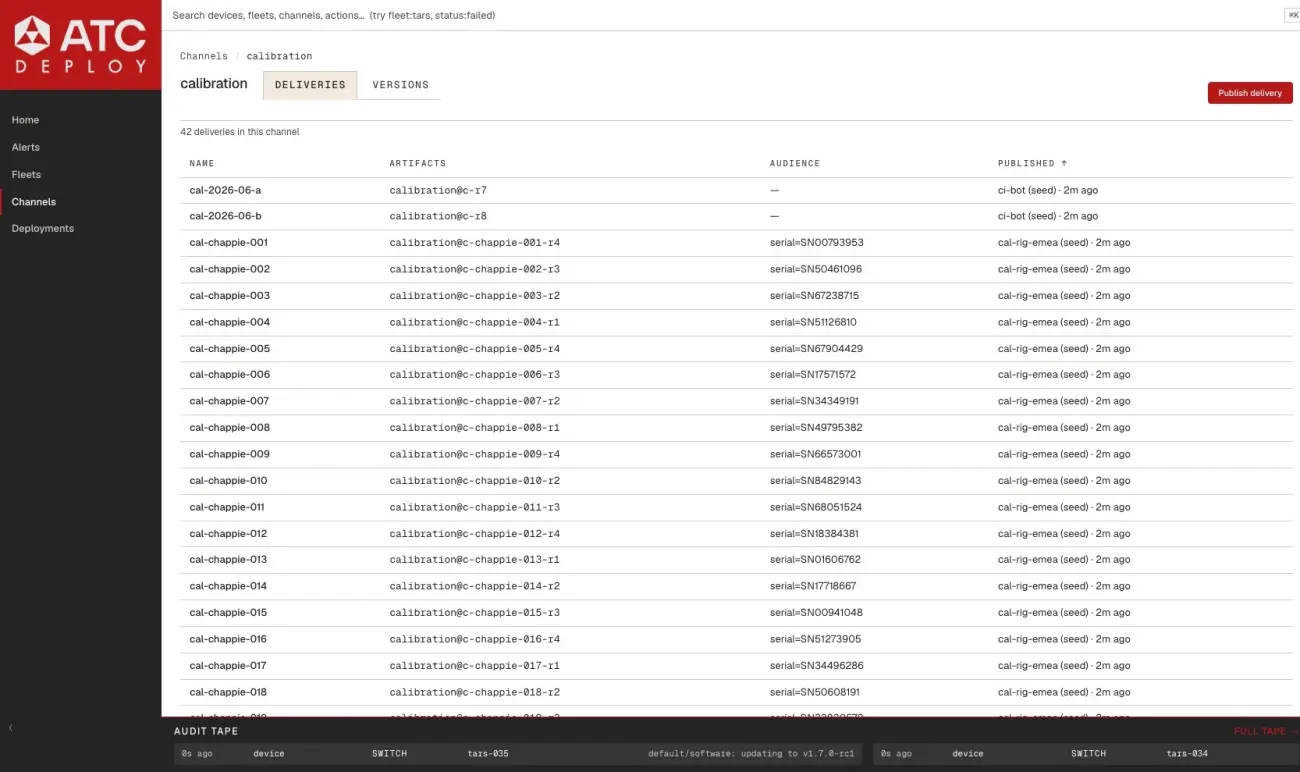
You’ve got a spreadsheet managing per-robot and per-group configurations and calibrations that go alongside your software.
Sound familiar?
ATC Deploy is rolling out to more teams soon
Join the waitlist02 — ATC BUILD - COMING SOON
CI on the hardware you actually ship.
ATC Build is a CI runner backed by our hosted specialized embedded compute infrastructure. Your continuous integration executes on the same platform you use in production, so you can evaluate hardware accelerators, timing, and system performance long before code reaches a robot.
Join the waitlistORIN NANO · NX · AGX · THOR
01
Get started with a single line
No capex, no racks of devkits to build and maintain. Point your pipeline at ATC Build and your first job runs on real Jetson hardware in minutes.
02
Practice
like you play
Measure and optimize performance in situ: on the same silicon, accelerators and clock speeds your robots run in production.
03
Avoid target-hardware bugs
No emulation, no "worked on my machine" surprises. Find out what broke the build before it makes it to a real robot.
HARDWARE
Run CI on the hardware you actually ship
NVIDIA Jetson in the cloud: Orin Nano, NX, AGX, and Thor. Need something else? Reach out about specialty x86, Raspberry Pi, Rockchip, and more.
INTEGRATION
Plugs straight into your CI
Works as a runner for GitHub Actions or GitLab CI. Keep your workflows, swap the machine underneath.
FIDELITY
No emulation
Use all the hardware, including CUDA, NVENC, DLA, and specialty accelerators, to make sure your software really works.
SPEED
The fastest way to run CI
Cached artifacts and Docker builds keep pipelines short, so devs and test techs stop waiting on pushes.
OBSERVABILITY
Fast feedback when things break
See what’s going wrong in your pipeline, with continuous performance profiling in the cloud, plus hooks and examples to make it easy.
STANDALONE
Works with or without ATC Deploy
ATC Build runs with ATC Deploy or entirely on its own.
BENCHMARK · 10 MBPS LINK
Ship faster than you thought possible
Deploying a single line change in a 1-layer docker image over a slow link is 10x faster with ATC Deploy
STATS
ATC Deploy finally lets you ship software as fast as your agents can write it.


05 — FAQ
Common questions
Don’t see your question answered here? Join the waitlist and reach out to us.

ATC Build is a CI runner backed by hosted embedded compute. A one-line change puts real target hardware into the build and test pipeline you already have, so continuous integration runs on the same platform you ship to. That covers what an x86 cloud runner can only approximate: hardware accelerators, timing, driver behavior, and sensor I/O.
Release definition, environment promotion, delivery to edge and robot targets, rollback, and fleet-wide visibility of deployment state.
Yes, Deploy works with whatever your stack is, from Docker images to any compiled software outputs, and provides a CLI designed for developers & agents, and rich web interface for fleet operators. Structured output and observability hooks make deployment activity available to existing automation and monitoring systems. Deploy will ship software to any Linux-based target, and works great with ROS, ROS2, DimOS, Nix, LeRobot, Halos, etc.
Deploy is built to support operating system updates, application bundles (arbitrary filesets and directory trees), OCI-compatible container images, configuration, models, and device-specific content. Multiple artifacts can be staged and activated as a single release, so you can deploy common software across a fleet while applying per-robot calibrations or per-customer configurations selectively.
Fleets can be segmented by any attribute, built-in or user-defined, like hardware revision, site, or role, with releases targeted per segment, so heterogeneous fleets can stay on known, intended versions.
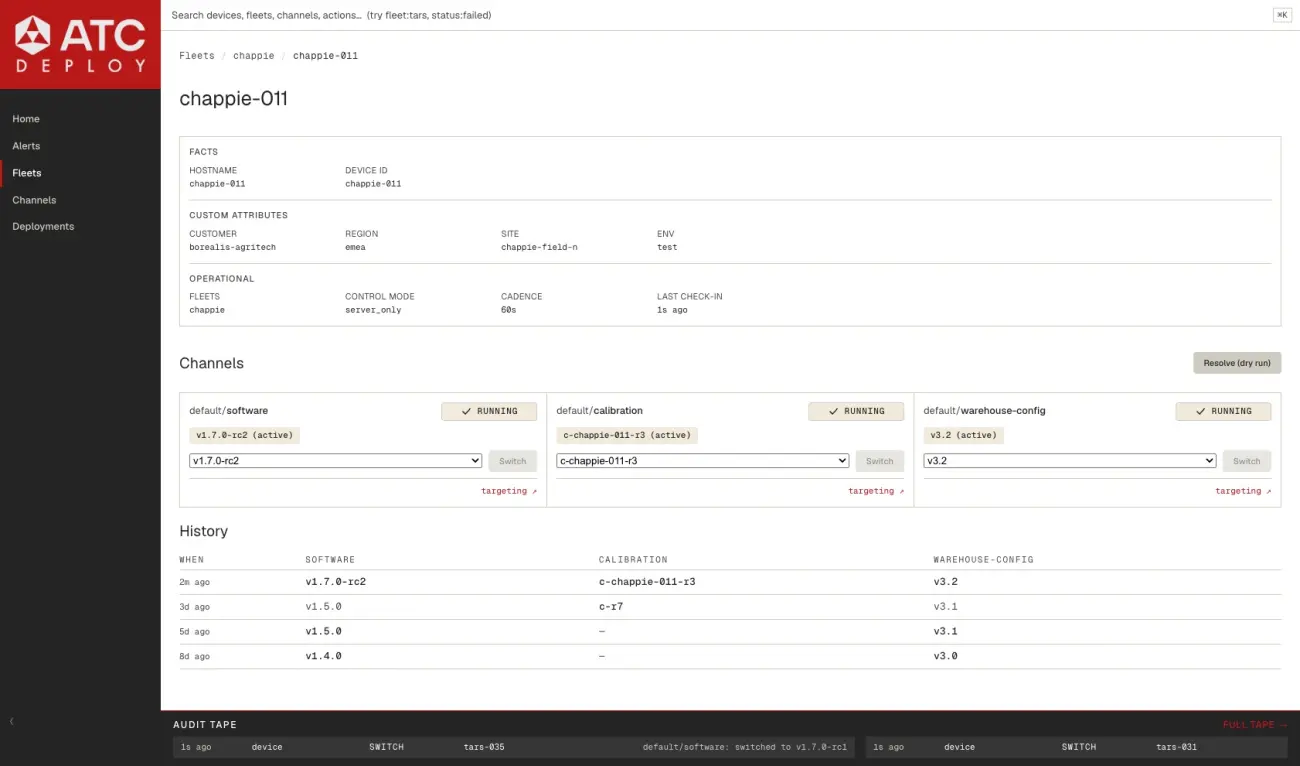
ATC Deploy’s web portal shows rich info like per-robot versioning, deployment progress and fleet convergence, plus health signals surfaced per unit, per site, and per fleet.
Yes. Agency Tool Co builds flexible foundational infrastructure for robotics companies. Take it piece by piece, or take the whole suite. ATC Build and Deploy are meant to work seamlessly with GitHub, GitLab, Blacksmith, Buildkite, BuildBuddy, etc.
Yes. Because Deploy works seamlessly with standard OCI container images, arbitrary file bundles (like a Mender artifact) and common OS update systems, migrating is straightforward. Reach out and we’ll help you plan the cutover. Migration guides coming soon.
Join the waitlist as we’re launching to new companies all the time. Installation is simple and you’ll be deploying to your first robot with ATC Deploy in minutes.